
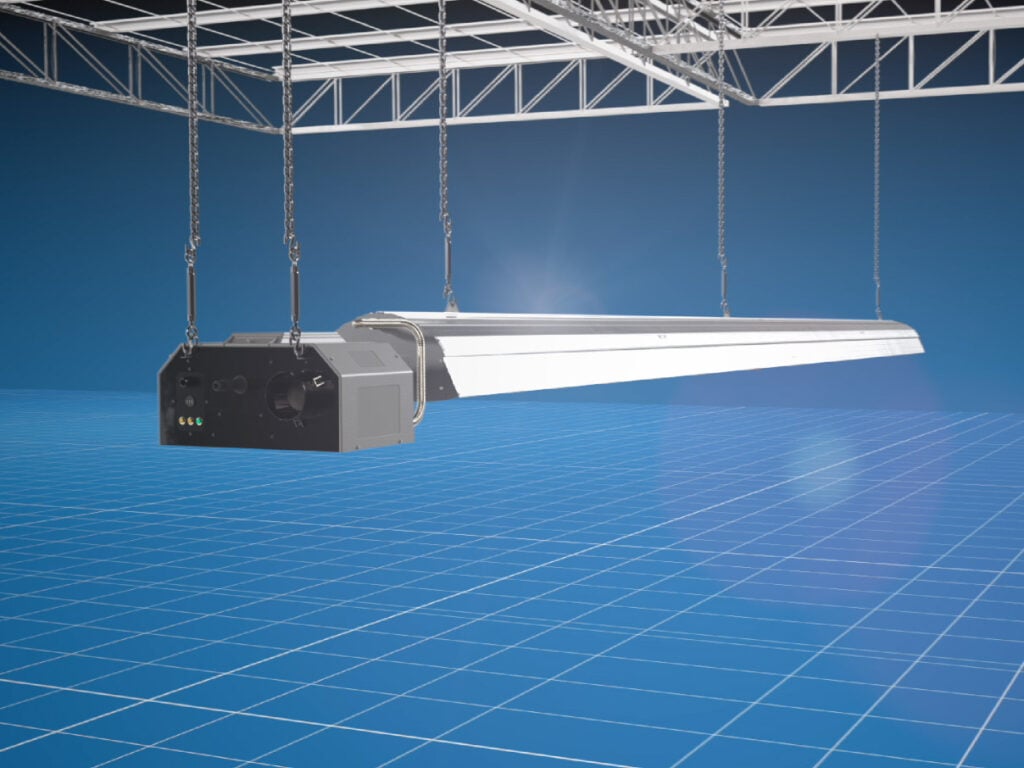
The reflector is one part of a complete infrared heating system, working together with the emitter tube, burner, controls, and installation conditions.
If you have spent much time around infrared heating specifications, you may have seen claims describing a reflector as “100% efficient” or designed to reflect “100% of the energy” toward the floor.
It sounds definitive. The reality is more complicated.
A reflector is an important part of an infrared heater, but it does not operate independently from the rest of the system. Reflector geometry, material, surface condition, emitter-tube temperature, heater input, mounting angle, and installation conditions all work together to determine how radiant energy is ultimately delivered.
So what does a “100% efficient reflector” actually mean? There is no industry standard that establishes a standalone reflector-efficiency rating, so the phrase should not be confused with a certified performance measurement of the complete heater.
Is There a Certified “Reflector Efficiency” Rating?
No.
AHRI Standard 1330 provides a method for measuring and rating the radiant output of a complete gas-fired infrared heater. It does not establish a separate certified efficiency rating for the reflector itself.
That distinction is important. Many demonstrations used to support “100% efficient” reflector claims rely on simplified ray paths that assume perpendicular or otherwise idealized emission from the tube. But an operating emitter tube does not radiate in a handful of neat perpendicular lines—it emits continuously around its entire circumference, creating a much more complex radiant field.
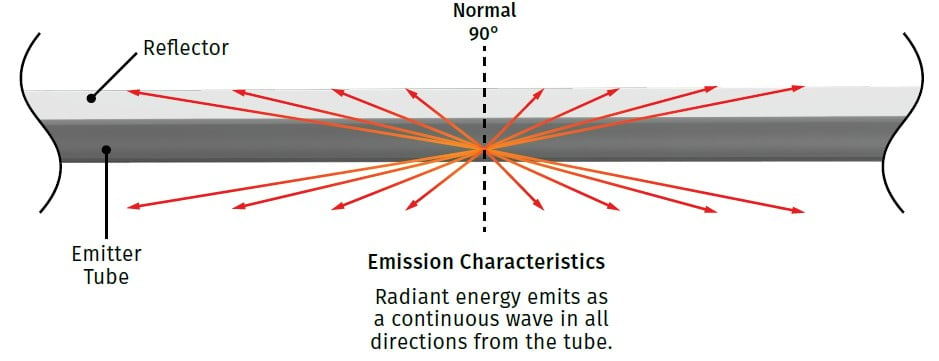
A reflector influences the direction and distribution of radiant energy, but evaluating the reflector alone does not tell you how much useful radiant output the complete heater ultimately delivers. Burner performance, emitter-tube temperature, heater length, controls, reflector material, and other design factors all contribute to the final result.
In other words, the reflector matters, but it is only one part of the heater being evaluated.
Can a Reflector Really Reflect 100% of the Energy?
Not in the literal sense.
No practical reflector material used in infrared heater construction is perfectly reflective across every relevant wavelength, temperature, and operating condition. When infrared energy reaches a solid reflector, some is reflected and some is absorbed. Energy that is absorbed cannot also be reflected, which is one reason reflectors become hot during operation.
Material also changes over time. Dirt, oxidation, scratches, surface contamination, and normal manufacturing variation can all influence how energy is reflected, absorbed, or scattered.
That does not mean a reflector is performing poorly. It simply means real materials do not behave like perfect mathematical surfaces.

Real reflector surfaces do not behave like perfect mirrors; surface texture and material properties create a mix of specular and diffuse reflection.
What About “Single-Pass” Reflector Designs?
Terms such as “single-pass” and “dual-pass” describe reflector design intent, not performance ratings.
A single-pass design generally attempts to minimize the amount of radiant energy that re-contacts the emitter tube after interacting with the reflector. A dual-pass design intentionally allows some reflected energy to return to the tube before leaving the heater.
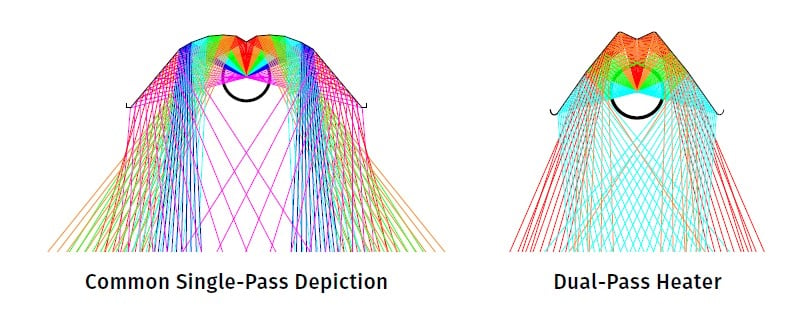
Single-pass and dual-pass diagrams illustrate design intent, but they do not by themselves establish whole-heater performance.
Simplified ray diagrams can make these concepts look more precise than they are in practice. They typically show a limited number of rays striking the reflector at carefully defined angles, while an operating heater produces a much more complex radiant field. Real reflector surfaces also include bend radii, manufacturing tolerances, surface variations, and both specular and diffuse reflective behavior. A two-dimensional diagram can illustrate design intent, but it cannot represent every radiant path occurring in an operating heater.
Why Would You Want Radiant Energy to Return to the Tube?
Because the emitter tube, not the reflector, is the primary radiant source.
A dual-pass reflector intentionally directs a portion of radiant energy back toward the emitter tube. That re-contact can help maintain a higher tube temperature, which matters because radiant output is strongly influenced by the absolute temperature of the emitter.
The Stefan-Boltzmann relationship describes this effect: radiant emission varies with the fourth power of absolute temperature, often written as T⁴. In practical terms, even a relatively modest change in emitter temperature can have a significant effect on its radiant potential.
This does not mean returning energy to the tube creates additional energy; the law of conservation of energy still applies. Instead, reflector design influences how energy moves within the heater and the balance between emitter temperature, reflector absorption, and useful radiant output.
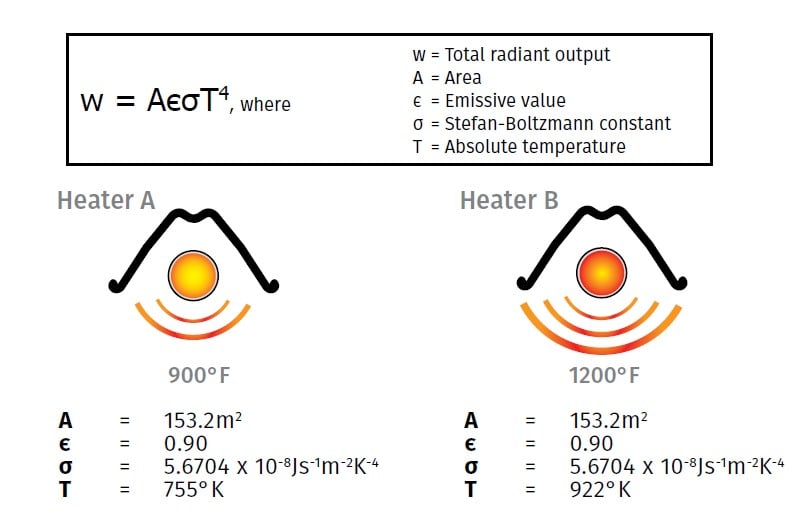
A sample calculation using the Stefan-Boltzmann law.
So the goal is not necessarily to prevent every reflected ray from touching the tube again. The goal is to design the complete heater so that the available energy is converted and distributed effectively.
What Does Reflector Geometry Actually Tell Us?
Reflector geometry matters, but it is only one part of heater performance. Material, surface condition, emitter temperature, heater input, and other design factors matter too.
That is why a simplified ray diagram or a claim of “100% reflector efficiency” cannot establish which heater performs better. “Single-pass” and “dual-pass” describe different design approaches; measured whole-heater performance tells us how effectively those designs actually deliver radiant energy where it is needed.
Answering that question requires measurement, not geometry alone.
In Part 2, we’ll look at how the radiant output of a complete gas-fired infrared heater is actually measured and what AHRI Standard 1330 tells us about heater performance.