

In Part 1 of our reflector series, we looked at why reflector claims and simplified geometry do not, by themselves, establish heater performance. In Part 2, we looked at how radiant output is measured under standardized conditions.
That leaves one final question: What actually drives the measured result?
The answer is not one reflector shape, one material, or one temperature. Radiant performance is the result of several design characteristics interacting as a system.
Reflector Material Matters
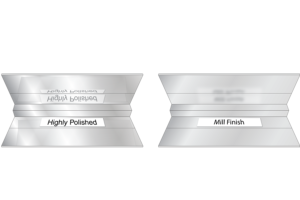
Reflector material and surface finish influence how radiant energy is reflected and absorbed. Highly polished and mill-finish surfaces can behave differently even when the underlying material is similar.
A reflector does more than redirect radiant energy. Its material and surface condition influence how much energy is reflected, absorbed, or scattered.
Polished aluminum is commonly used because of its reflective properties, but not all aluminum surfaces behave the same way. Highly polished material can cost more and may be more difficult to source than standard mill-finish material, but its improved reflective characteristics can make that investment worthwhile where radiant performance is a priority. Surface finish, oxidation, dirt, scratches, and manufacturing variation can all affect performance.
That is why the number of bends in a reflector does not tell the whole story. Two reflectors with similar geometry can behave differently if their materials or surface conditions differ.
Geometry determines the path available to radiant energy. Material helps determine what happens when that energy reaches the reflector.
Geometry and Emitter Temperature Work Together

Reflector geometry influences how radiant energy is redirected and how some reflected energy may interact with the emitter tube again.
Reflector geometry still matters. It affects how radiant energy is redirected, how broadly it is distributed, and how much reflected energy may interact with the emitter tube again.
As discussed in Part 1, the emitter tube is the primary radiant source, and radiant emission is strongly influenced by its temperature.
Energy redirected back toward the emitter is not lost; it is transferred within the heater and can be reabsorbed by the tube, influencing its temperature and radiant output. That means a reflector design can affect more than direction. If it changes the thermal behavior of the emitter tube, it can also influence radiant output.
The goal is not simply to maximize one isolated characteristic. A hotter tube, a highly reflective surface, or a particular geometry does not automatically produce the best result on its own.
Small Design Changes Can Produce Measurable Differences
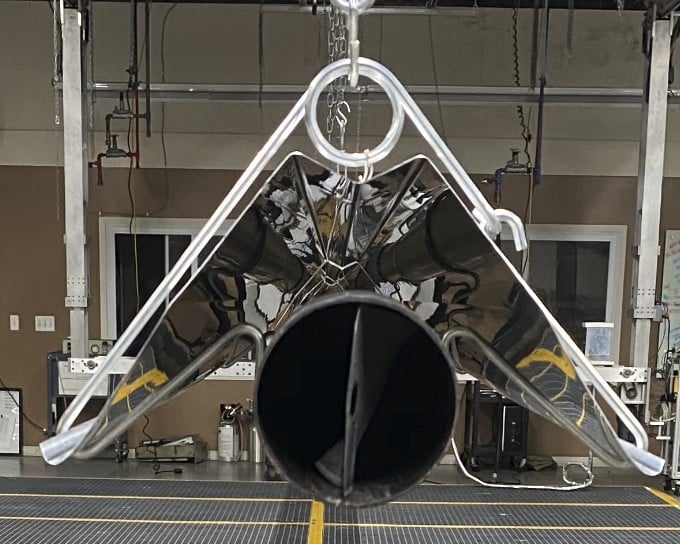
The relationship between the emitter tube and reflector geometry influences how radiant energy is redirected and how the heater behaves as a system.
One advantage of controlled laboratory testing is the ability to change one variable while keeping others consistent.
For example, two reflector configurations can be evaluated using the same heater length and input under equivalent test conditions. The resulting radiant maps can show whether the change affected the intensity or distribution of radiant output.
That is much more useful than assuming a design must perform better because it has more reflective surfaces, a different bend pattern, or a particular marketing label.
A design feature is only meaningful if it contributes to measured heater performance.
Performance Is a System Result
Burner input, emitter-tube temperature, reflector material, reflector geometry, heater length, controls, and operating conditions all influence radiant performance.
That is why no single feature should be treated as a shortcut for overall heater performance. A reflector shape, stack temperature, or material specification may tell you something useful, but none of those details can stand in for measured output under comparable conditions.
For engineers and specifiers, the better comparison is the one that looks at the heater as a system: how effectively it delivers radiant energy, how that energy is distributed, and whether that performance matches the needs of the application.
The strongest design is not the one with the most impressive individual claim, but the one whose components work together to produce the measured result the application requires.