

When many people picture infrared radiant heating, they envision warehouse ceilings, exposed tube heaters, and industrial spaces. And to be fair, radiant heat has been used successfully in warehouses and manufacturing facilities for decades.
But modern radiant heating applications extend far beyond commercial and industrial buildings. Today, infrared radiant systems are increasingly found in restaurants, hospitality venues, outdoor entertainment spaces, luxury garages, residential patios, and architecturally driven commercial environments where performance and appearance both matter.
Hospitality and Event Spaces
Hospitality environments pose unique challenges when it comes to heating. Restaurants, event venues, resorts, and open-air gathering spaces are designed around atmosphere and experience just as much as functionality. Comfort matters, but so does preserving the look and feel of the space.
That balance is one reason radiant heat can be such a strong fit for hospitality applications. Unlike traditional forced-air systems, infrared radiant heaters can provide targeted comfort without relying on large volumes of moving air. That makes them especially useful in spaces where doors remain open, outdoor exposure is common, or guests are spread throughout a large seating area.
At Madden’s on Gull Lake in Brainerd, Minnesota, our DX3L and HL3 Series infrared radiant tube heaters were integrated into the resort’s open-air pavilion space. The heaters help extend the venue’s usability during cooler weather while blending naturally into the structure’s architectural design. Rather than visually dominating the space, the systems work alongside the wood finishes, lighting, and open-air layout to maintain guest comfort without distracting from the environment itself.
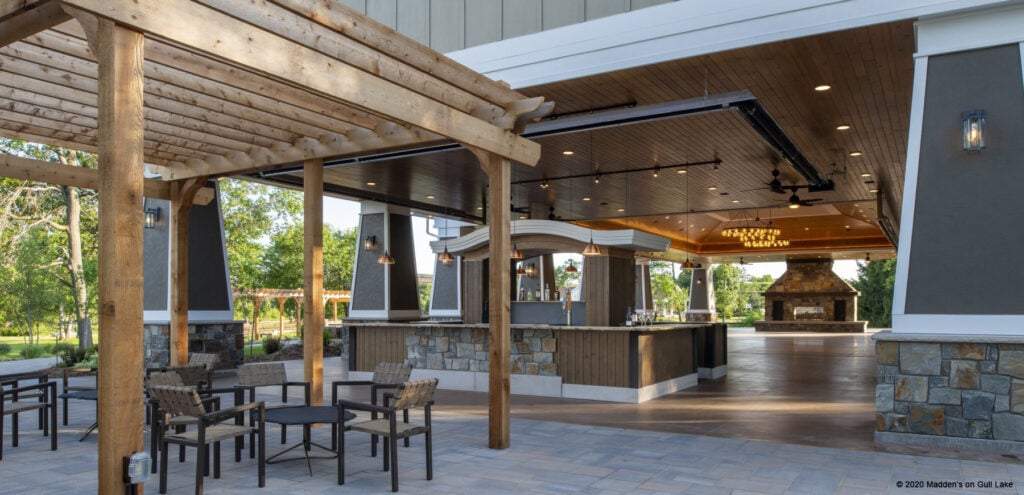
Madden’s open-air pavilion uses infrared radiant tube heaters to provide guest comfort without disrupting the venue’s atmosphere.
For hospitality venues, that is often the goal: the heating system should support the experience, not become the experience. Guests may not pay much attention to a well-placed radiant system overhead, and that is usually the point. What they notice is whether the space feels comfortable enough to linger, dine, gather, or stay through an event as temperatures drop. In that sense, radiant heat can help make patios, pavilions, and open-air venues more usable throughout more of the year while preserving the atmosphere that made the space worth designing in the first place.
Luxury Pole Barns & Residential Patios
Radiant heat is also finding a place in residential settings, particularly in spaces that go beyond basic utility. Covered patios, outdoor living areas, workshops, and high-end garages are increasingly being designed as extensions of the home, which means the heating system has to support the space instead of distracting from it.
In these environments, equipment cannot feel like an afterthought. Homeowners want systems that make the space more usable during cooler weather without taking away from the design they invested in. Infrared radiant heating offers that flexibility, with options that can be recessed, mounted discreetly, or integrated into the structure in a way that feels intentional rather than intrusive.
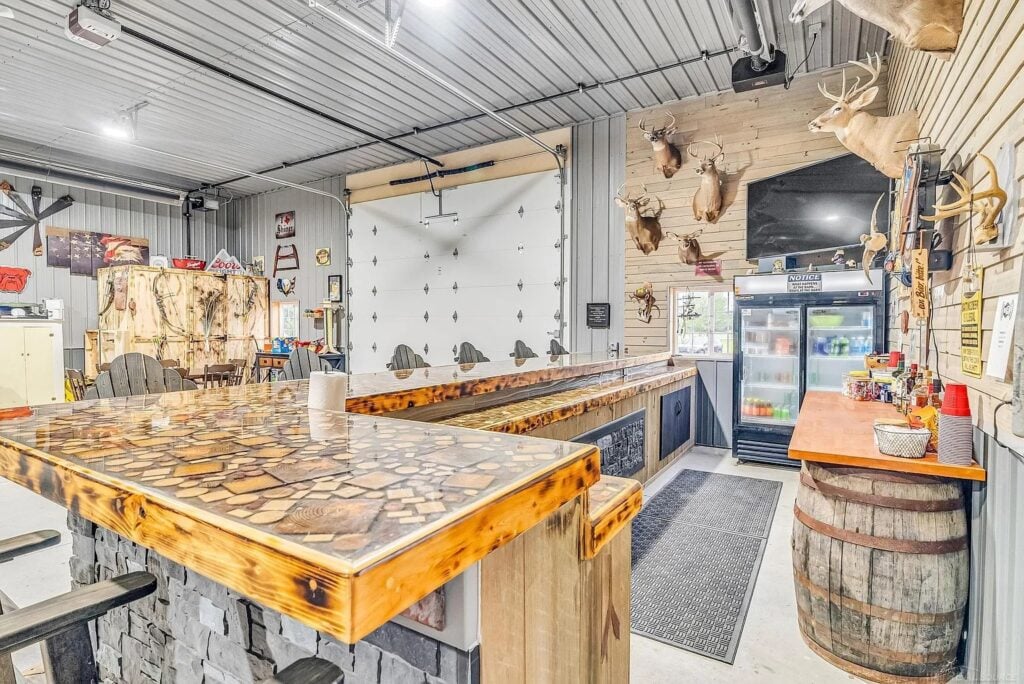
Radiant tube heaters can provide comfort in detached pole barns and luxury garage spaces while fitting naturally into the overall design.
That is evident in spaces like upscale pole barns and luxury garages, where radiant heaters can help maintain comfort while still fitting naturally within the overall aesthetic. Product selection is important in these applications. Certain residentially certified heaters, such as our LS3 and LD3 Series, are approved for use in attached garages, while commercial/industrial tube heater series may be suitable for detached pole barns or similar structures, provided there are no attached sleeping quarters, and the installation complies with applicable codes and product requirements.
What might once have been considered a simple outbuilding is now often used for entertaining, relaxing, or showcasing vehicles and hobbies, and the heating solution has to reflect this shift. The same is true for residential patios, where radiant heaters like our DSR Series can provide warmth without disrupting clean architectural lines or visually competing with other design elements.
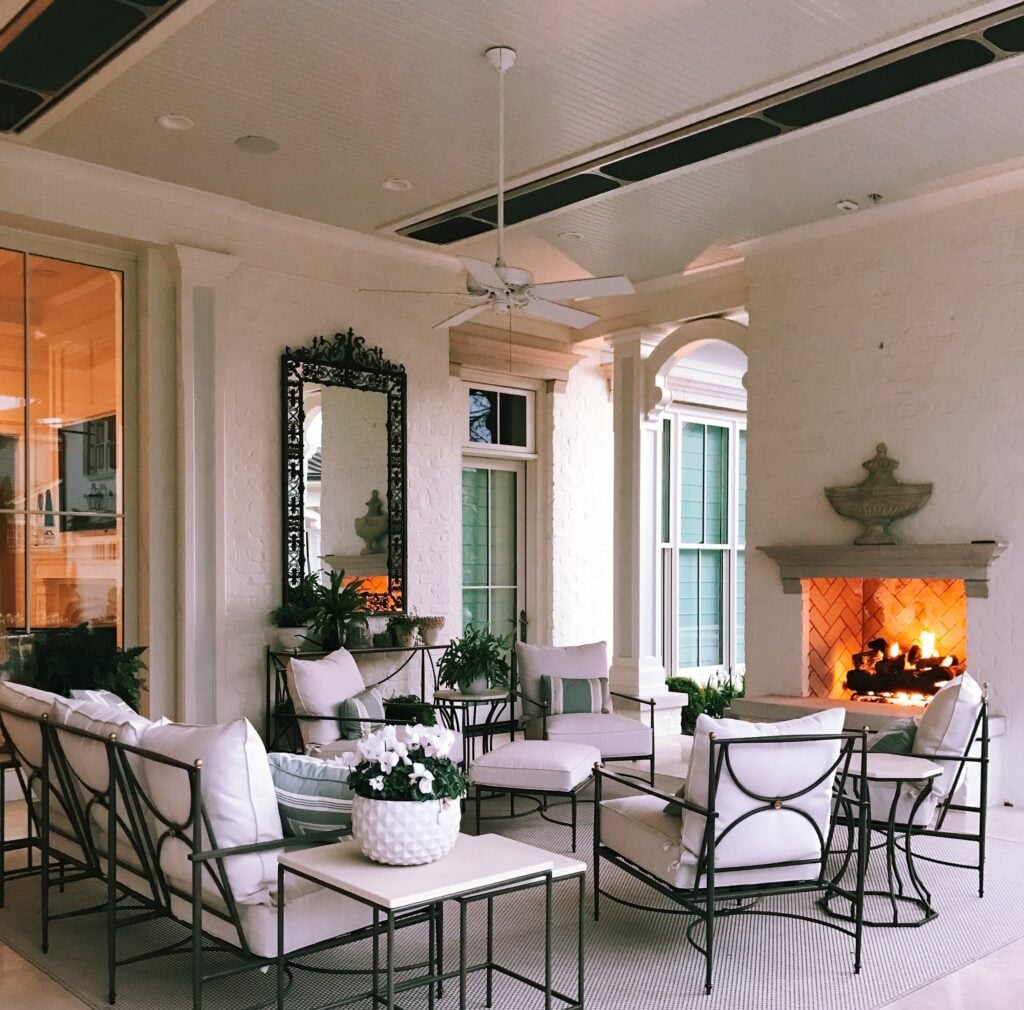
Recessed radiant heaters can blend into residential outdoor living spaces without becoming the focal point.
These applications highlight an important point: radiant heat is not limited to industrial settings or purely functional spaces. When selected thoughtfully, it can support both comfort and design, helping residential spaces stay inviting, usable, and visually cohesive even as temperatures fall.
Restaurant & Patio Applications
Restaurants and bars face a familiar challenge when temperatures drop: outdoor and semi-outdoor seating areas can quickly become uncomfortable, even when the space itself still has plenty of value. A patio, courtyard, or covered dining area may be beautifully designed, but if guests are cold, they are unlikely to stay long.
That makes heating a design decision as much as a comfort decision. In restaurant environments, equipment must accommodate seating layouts, server paths, lighting, décor, ceiling heights, and sightlines. A heating system may perform well on paper, but if it feels awkward in the space, competes with the atmosphere, or limits how the patio can be used, it becomes part of the problem.
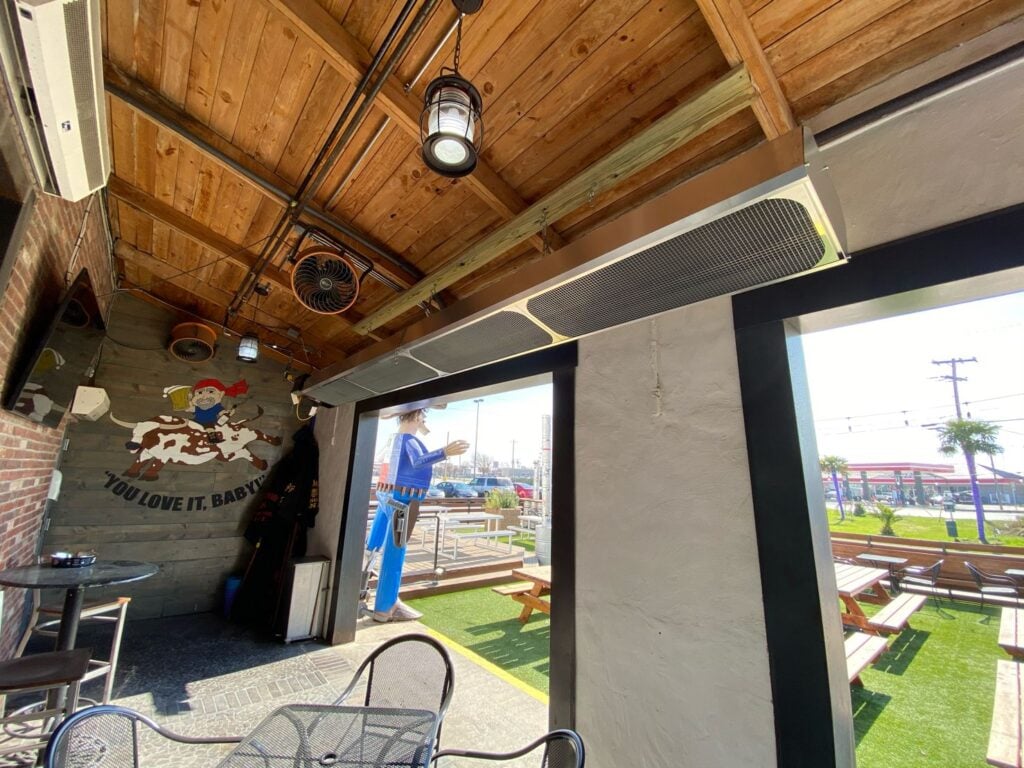
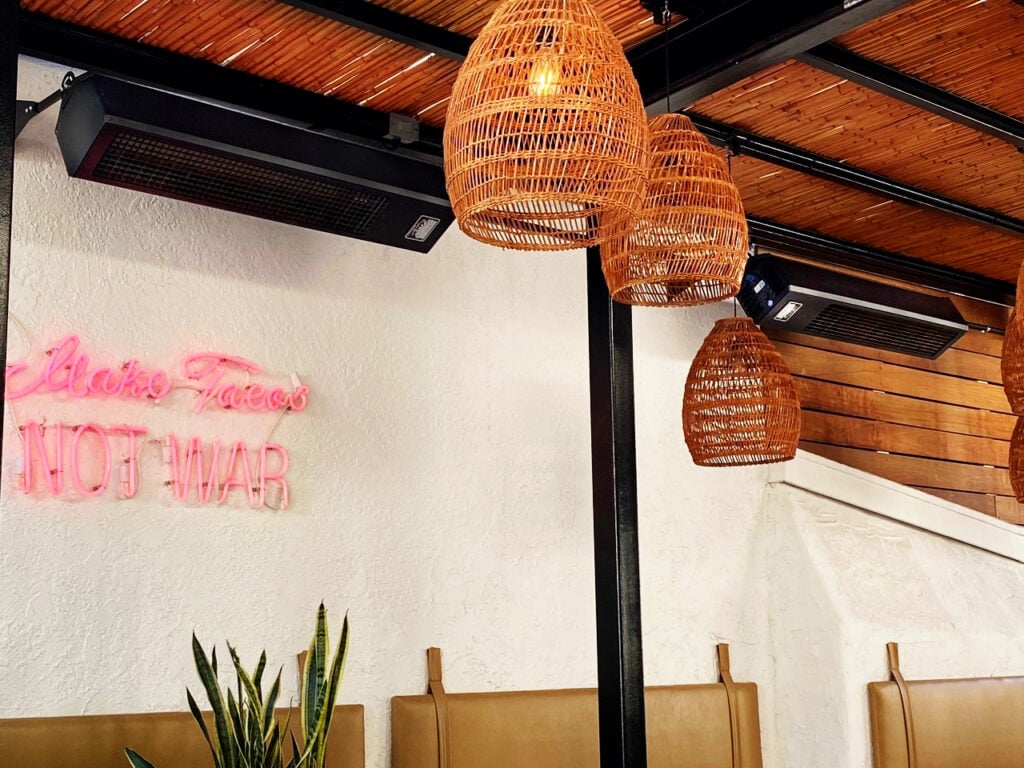
Designer radiant tube heaters can be integrated into covered patio spaces without distracting from the restaurant’s overall atmosphere.
Radiant heating gives restaurant owners and designers several ways to address those challenges. Designer tube heaters can be used in covered patio spaces where a more finished appearance is desired. Electric infrared heaters can provide a clean, low-profile option for dining areas where visual integration is especially important. High-intensity patio heaters, like our DSC Series, can provide focused warmth in outdoor entertainment spaces where permanent enclosure is not practical.
High-intensity patio heaters like our DSC Series offer another option for outdoor dining and entertainment spaces where focused warmth is needed.
The right approach depends on the space. A casual patio may call for a different solution than a polished dining environment, just as an open-air bar may need a different layout than a covered courtyard. The common thread is flexibility: radiant heat can help make outdoor and transitional restaurant spaces more comfortable without sacrificing the atmosphere that makes those spaces appealing in the first place.
Radiant heat may have earned much of its reputation in warehouses, manufacturing facilities, and other industrial spaces, but its applications have expanded far beyond its humble origins. From open-air pavilions and restaurant patios to luxury garages and residential outdoor living areas, modern infrared radiant systems can be selected and positioned to support both comfort and design. The right heating solution should fit the way a space looks, feels, and functions. When thoughtfully applied, radiant heat does not have to look industrial or feel like an afterthought. It can become part of what makes a space more usable, more comfortable, and more inviting.